

All-Campus Card

"Do You Want To Sell Sugared Water or ... Change The World?"
Steve Jobs
1983
All-Campus Card
CONCEPT
An "All-Campus Card" is a multi-application patron identification credential, which typically includes a patron image and may provide access to hundreds of privileges throughout all facilities and locations of a local or global organization.
This non-patented concept, co-developed by Joseph G. Pietrantoni and Robert C. Huber, first implemented at Duke University (1985), has been adopted in part or whole by thousands of academic, educational, healthcare and corporate campuses around the world.
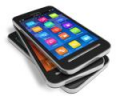
Although "All-Campus Cards" were traditionally issued as photo ID cards or badges, a personal "credential" is not limited to one technology or a single device. Credentials can take many forms such as cards, metal keys, wristbands, key fobs, watches, tokens, thumbdrives, contemporary wearable technology and virtual e-mobile devices - including smartphones.
Ever since its introduction in 1985, patrons have been provided with access to several value and monetary accounts (e.g., meal plans, dining dollars, campus dollars, copier accounts, parking accounts, season tickets, etc.) using the same card.
Originally restricted only by institution policies, patrons have always had access to multiple active credentials (e.g., card, badge, key fob, smartphone application, etc.) simultaneously.
Millions of employees, students and their families have had the experience of transparently using an "All-Campus Card" (multi-application credential) for access to doors, parking lots, sports venues, hotels, restaurants, campuses and websites.
Originally imagined in the 1960s to simply eliminate paper tickets, future historians may include this revolutionary and still evolving innovation which has had a "hummingbird effect" (ref. Steven Johnson) on how educational institutions and business organizations provide member services to their customers now and into the future.

< Pioneers Innovators >
The "All-Campus Card" Evolution
PART 1
Ever since the first student enrolled at Harvard University in 1636, there arose the need to verify the official student list in classes and dining halls. Although there were printing presses, any changes to the official list and their privileged services therefore had to be made and communicated manually to many offices throughout an instiution.
Two hundred and fifty years later, the same process essentialy continued with the evolution and issuance of printed credentias for every campus service (e.g., meal plan card, library card, bus pass, athletic ticket, parking pass, etc.). However, since most credentials were created independently, other than placing a telephone calls to other offices (e.g., Registrar's Office), there was never a method to provide absolute real-time verification.
Since dining halls were considered the first campus business operations, with an increasing number assigned to outside food service contractors, there became an overt business need to verify dining privileges - by meal plan and active enrollment in real-time.
The issuance of printed coupons, tokens or passes for residence hall students by meal was cumbersome for staff and cashiers - and most inconvenient for students. Some insitutions had check-in lists (by meal) which were manually checked off by the students themselves (on the Honor System) or by cashiers. The next progression to manually punched meal cards subsequently increased labor, slowed service times, and become an opportunity for student creativity.
Historically, it appears that the birth of the electronic campus card industry can be traced to 1968. A company in Rochester, New York (R.D. Products) developed and installed the first known electronic card access reader at the Rochester Institute of Technology.
What soon became nationally known as the "VALI-DINE" system (i.e., Validation of Dining) electronically read punched holes in student meal plan cards. This early system even included mechanical counters which electronically "read" total valid entries per meal for that dining room.
With the advent of this new technology, food service departments could not only dramatically reduce the number of unauthorized students, but could reduce the food served by new meal plans designed for "one time only" access per meal period.
In 1972, the campus card industry changed dramatically by two young entrepreneurs who developed the first meal plan card system that read magnetic stripe technology. Gary Lorenz and John Darjany quickly drew national attention with their revolutionary food service system at California State Polytechnic University.
Since the phenomenon of retail credit cards with magnetic stripes had only been introduced a few years earlier, these pioneers helped schools adopt magnetic striped ID (identification) cards with a portable card production station mounted in a suitcase.
Over the next decade, over 500 colleges and universities in North America, began to produce magnetic striped cards for individual campus operations (e.g., food service, vending machines, snack machines, laundry machines, bookstore, etc.).
While most Registrar Offices continued to produce ID cards for every student on an annual basis, their use of pre-printed labels inspired other departments to also use labels or stickers and simply affix them to the annual cards (e.g., library) instead of producing their own department credentials.
As food service departments, began adopting the more expensive, but higher technology magnetic stripe cards (non-photo), food service contractors sought to reduce the costly and deceptive practice of students lending their non-photo meal plan cards to other non-meal plan students by adding photos to cards.
Adding photos to ID cards became a major expense in time, labor and materials, but dramatically reduced costs of non-meal plan students.
Traditionally, Registrar Offices usually did not produce and issue offical campus ID cards until residence hall students had been on campus for several days. Therefore, dining service departments faced new logistic challenges for production, issuance and distribution of temporary cards for "pre-semester" meals (e.g., coupons, punch cards).
The same process evolved in parallel with other departments - including security, parking, athletics, recreation center, etc. The number of decentralized departments that produced their own department ID cards only increased exponentially. By the 1980's, it was not unusual for students to be issued over a dozen credentials (i.e., cards, labels, stickers, tokens, chips, etc.) - most of which needed to be reissued each year or sometimes per semester. We obtained actual samples of up to 150 forms of annual identification issued by institutions during the 1980's and 1990's.

To Be Continued ...
< Pioneers Innovators >
Forecast | Museum | Timeline | Milestones | Library | Photos | Marketplace


► View ● Print ● Download ● Share
RHA_Campus Card Business Forecast (2017)[...]
Adobe Acrobat document [622.6 KB]
ROBERT HUBER ASSOCIATES
► View ● Print ● Download ● Share
FAST FACTS_Robert Huber Associates.pdf
Adobe Acrobat document [588.0 KB]
ROBERT HUBER ASSOCIATES
► View ● Print ● Download ● Share
CONSULTING SERVICES_Robert Huber Associa[...]
Adobe Acrobat document [360.4 KB]

Robert Huber Associates
9446 East Jenan Drive
Scottsdale, Arizona USA 85260
huber@AllCampusCard.com
www.AllCampusCard.com
(480) 551-0520

Vendor Independent
Campus Card Business Consultants




























































 Print
Print 